
The Future of Carbon Credit Pricing: A New Era for Climate Investment
A Druath Perspective | 2025
The carbon market is undergoing a profound transformation. After a turbulent few years, 2025 marks a turning point — where trust, quality, and integrity begin to define the future of climate finance.
At Druath, we believe in a nature-first approach that recognises the true value of Irish ecosystems in the global fight against climate change. That’s why we're tracking the trends, projections, and real-world pricing that will shape carbon credit markets for decades to come.
From Collapse to Credibility: The Voluntary Market Rebounds
In 2023, the voluntary carbon market suffered a major blow — its global value plummeting from $1.9 billion to just $0.7 billion due to scandals and poor-quality offsets. But this disruption, far from spelling the end, triggered a vital course correction.
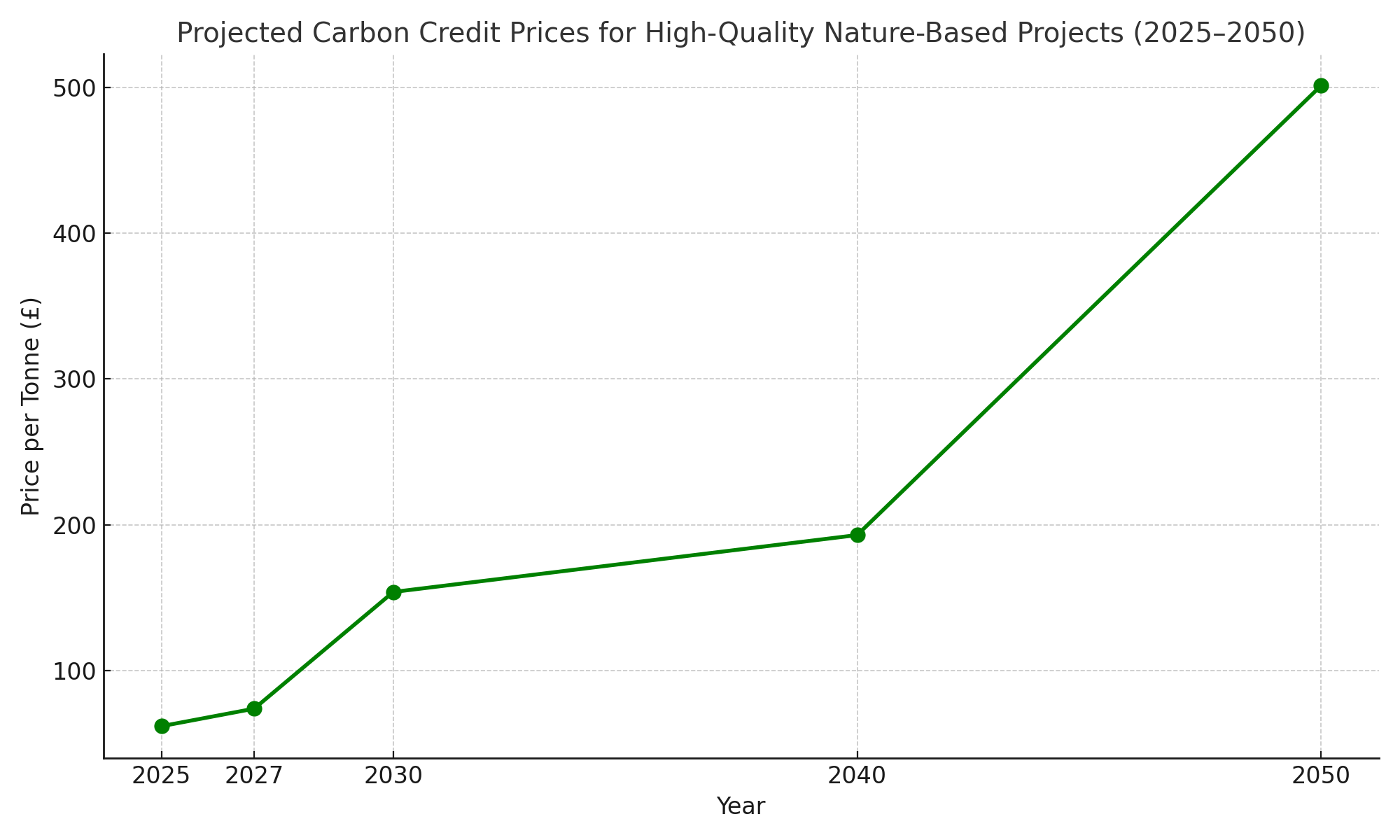
Out of this turbulence emerged the Oxygen Conservation Carbon Curve, a forward pricing model from the UK projecting high-quality carbon credit prices up to 2050. Initially ambitious, the Curve now looks conservative — with UK credits already reaching £125 per tonne in 2025, surpassing its own forecasts.
A Market Shift: Quality Over Quantity
We're seeing the market divide into three distinct classes:
Standard Credits: Verified under existing schemes like the Woodland or Peatland Codes.
High-Quality Credits: Delivering carbon savings plus biodiversity and social co-benefits.
Premium Credits: Offering measurable, exceptional impact and verified co-benefits.
Premium credits, including some biodiversity-focused Irish projects, are already trading at significantly higher prices, driven by corporate demand, policy alignment, and the growing sophistication of buyers.
Irish Relevance: What This Means for Ireland
Ireland’s natural capital — from peatlands to native woodlands — has the potential to play a major role in the European carbon economy. But we must act now to ensure high integrity standards, transparent monitoring, and a strong local framework to attract both compliance and voluntary buyers.
Opportunities include:
Raising Irish project standards to align with UK-level quality and verification systems.
Positioning Irish peatlands as key carbon sinks, particularly as restoration and protection gain recognition in EU climate frameworks.
Launching forward-looking Irish pricing models, inspired by the Oxygen Curve, to build investor confidence and secure long-term private capital.
The Carbon Curve: Where We’re Headed
Here’s a snapshot of projected carbon credit prices for high-quality nature-based projects:
While these numbers are based on UK market data, Ireland is well placed to command similar or higher prices, particularly for peatland and native forest restoration, if integrity and transparency are prioritised.
A Call to Action for Ireland
The carbon market is no longer speculative — it’s structural. And as we accelerate toward our 2030 and 2050 net zero targets, carbon credit pricing will increasingly reflect what we truly value: biodiversity, resilience, and long-term impact.
Druath is here to help Irish landowners, investors, and communities navigate this emerging landscape. Whether you're designing a carbon offset project, seeking to invest in regenerative land use, or looking to secure verified carbon units — we can guide the way.
Now is the time to act. The future of Irish carbon pricing depends on the steps we take today.